Table of Contents
The modern frequent traveler doesn’t just collect passport stamps—they curate sensory memories. In 2026’s hyper-connected world, where a single flight can transport you from a Tokyo boardroom to a Santorini sunset, your fragrance must work harder than ever. Luxury citrus perfumes have emerged as the discerning jet-setter’s secret weapon, offering olfactory freshness that transcends time zones, climates, and cultural contexts. These aren’t your grandmother’s sharp, fleeting colognes; today’s high-end citrus compositions are sophisticated molecular marvels designed to evolve on skin for 12+ hours while respecting the confines of an airplane cabin.
What makes this category particularly compelling for travelers is its unique psychological profile. Citrus notes activate the brain’s limbic system in ways that combat travel fatigue and jet lag, providing an instant, natural energy boost without the crash of caffeine. Meanwhile, the luxury tier ensures you’re not compromising on performance, sustainability, or that ineffable sense of occasion that turns a routine business trip into a curated lifestyle experience. As we navigate the evolving landscape of travel regulations, climate consciousness, and biometric security, your fragrance choice becomes more than personal preference—it’s a strategic decision.
Top 10 Luxury Citrus Perfumes For Travel



Detailed Product Reviews
6. Illume Beautifully Done Citrus Crush Petite Perfume Spray

Overview: This travel-friendly fragrance delivers a sophisticated citrus experience anchored in balsamic sandalwood. The compact spray bottle contains a vegan, cruelty-free scent designed for midday refreshment and on-the-go lifestyle needs, presented in gift-ready packaging that elevates it from simple utility to thoughtful indulgence.
What Makes It Stand Out: The three-tiered composition—sun-ripened mandarin top notes, muddled summer fruit heart, and balsamic sandalwood base—creates surprising depth for a petite format. Its 100% vegan formulation and elegant boxing elevate it beyond typical travel sprays, making it equally suitable for self-indulgence or gifting. The brand emphasizes timeless style over trendy gimmicks, appealing to discerning consumers.
Value for Money: Positioned in the mid-range for niche travel sprays, the ethical sourcing and layered complexity justify the investment. While smaller than full-size bottles, the concentration allows for meaningful wear time. Comparable vegan citrus perfumes often cost 20-30% more, particularly with comparable packaging, making this a smart choice for conscious shoppers.
Strengths and Weaknesses:
- Strengths: Ethically formulated, sophisticated scent pyramid, portable design, attractive gift packaging, versatile day-to-night wear
- Weaknesses: Limited longevity due to size, may require frequent reapplication, balsamic base might feel heavy in hot weather, not ideal as primary signature scent
Bottom Line: Perfect for fragrance enthusiasts seeking an ethical, portable option or a thoughtful gift. The Citrus Crush excels as a purse staple for refreshing your scent throughout the day, though it works best as a complement to, rather than replacement for, a full-size fragrance wardrobe.
7. Dossier - Citrus Green Apple - Eau de Parfum - Perfume Luxury - Pure Infused - For Women - Fragrance 1.7 oz (Spray 50ml)

Overview: Dossier democratizes French perfumery with this accessible Eau de Parfum featuring vibrant green apple, lime, and lemon top notes. Sourced from Grasse, France, this 1.7 oz spray delivers higher concentration luxury without the traditional markup, while maintaining vegan, paraben-free, and phthalate-free standards for the modern consumer.
What Makes It Stand Out: The brand’s direct-to-consumer model brings Grasse-sourced ingredients to the mass market, challenging luxury fragrance economics. The bright citrus-apple opening offers universal appeal, while the clean formulation addresses modern consumer priorities. Higher concentration levels typically reserved for prestige houses ensure lasting power comparable to $150+ fragrances.
Value for Money: Exceptional. Comparable designer citrus fragrances cost 3-5 times more for similar volume and concentration. The transparent sourcing and safety-conscious formulation add premium value at an affordable price point, making true luxury accessible without compromising on quality or ethics.
Strengths and Weaknesses:
- Strengths: Authentic French ingredients, high EDP concentration, clean vegan formula, affordable luxury positioning, invigorating fruit-citrus blend
- Weaknesses: Apple note may feel simplistic to niche connoisseurs, lacks the complexity of ultra-premium alternatives, mass-market appeal might not suit those seeking exclusivity
Bottom Line: An outstanding choice for quality-conscious buyers avoiding designer markups. Dossier delivers genuine French perfumery craftsmanship at a revolutionary price, making it ideal for daily wear or those building a fragrance collection without financial compromise.
8. HoogaLife Pheromones Perfumes for Women,Inspired by Gu/c.c.i GuiIt/y, Citrus, Peach, Amber, Patchouli,Travel Size Perfume Oil for Women, 0.34/10ml fl.oz, Made in USA- No.E05
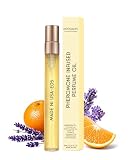
Overview: This travel-sized perfume oil combines pheromone technology with an inspired-by fragrance profile featuring citrus, peach, amber, and patchouli. The 10ml roll-on format blends essential oils with skin-nourishing carriers like jojoba and vitamin E, offering portable luxury made entirely in the USA for the pheromone-curious consumer.
What Makes It Stand Out: The pheromone infusion sets it apart from standard perfume oils, claiming enhanced social appeal. The oil-based delivery provides intimate scent projection and moisturizing benefits. Its explicit designer inspiration and American manufacturing target value-conscious consumers seeking recognizable luxury profiles without the associated cost.
Value for Money: Moderate. While pricier per ounce than some competitors, the pheromone addition and premium carrier oils justify the cost for believers in the technology. The compact size allows risk-free experimentation with a luxury-inspired scent profile that would cost significantly more in authentic designer form.
Strengths and Weaknesses:
- Strengths: Nourishing oil base, ultra-portable, pheromone-enhanced formula, USA-made quality, skin-friendly ingredients
- Weaknesses: Pheromone efficacy lacks scientific consensus, small 10ml size depletes quickly, “inspired by” may disappoint purists, oil format stains fabrics if overapplied
Bottom Line: Best suited for curious buyers interested in pheromone fragrances or seeking a skin-conditioning scent option. Approach with realistic expectations about the pheromone claims, but appreciate it as a well-crafted, portable perfume oil with a familiar luxury profile.
9. BellaVita Luxury Honey Oud Eau de Parfum (3.4 fl. oz.) | Patchouli, Vanilla, Bergamot, Floral & Spicy + Vegan Essentials Oils | Best gift for Valentine’s Day | Long-Lasting Unisex Fragrance

Overview: This generous 3.4 oz Eau de Parfum merges honeyed sweetness with rich oud in a unisex formulation. European-sourced oils blend with vegan essential oils, creating a complex scent journey from bergamot top notes through oud and rose heart to amber and vanilla base. The result promises all-day longevity and universal appeal at an aggressive price point.
What Makes It Stand Out: The honey-oud combination offers a unique gourmand-woody fusion rarely found at this price point. The substantial bottle size provides exceptional volume, while unisex positioning broadens its audience. European oil sourcing combined with Indian craftsmanship creates an intriguing global quality story that challenges traditional luxury narratives.
Value for Money: Outstanding. Niche oud fragrances typically command $150-300 for similar volume. This offers genuine oud character with sweet accessibility at a fraction of the cost, making it a smart entry point for oud exploration without the typical financial barrier.
Strengths and Weaknesses:
- Strengths: Large 3.4 oz size, unique honey-oud profile, long-lasting EDP concentration, unisex versatility, ethical vegan formulation
- Weaknesses: Oud’s intensity may overwhelm sensitive noses, honey sweetness could feel cloying in humidity, brand recognition lags behind established houses
Bottom Line: An excellent value proposition for oud enthusiasts and adventurous newcomers alike. The honey-oud balance creates a crowd-pleasing interpretation of a luxury ingredient, making it an ideal signature scent or Valentine’s gift for those appreciating bold, sweet-woody fragrances.
10. BellaVita Luxury Him and Her Perfume | Valentine’s Day Gift Bundle for Men & Women | 8x20ml Mini Perfumes | Woody, Floral, Citrus, Oud, Vanilla & Musk | Couple Gift Set | Travel-Ready Fragrance

Overview: This comprehensive couple’s set includes eight 20ml fragrances—four masculine (woody, citrus, oud) and four feminine (floral, fruity, musky). The collection provides a complete scent wardrobe for partners, featuring travel-friendly bottles that encourage experimentation across moods and occasions while maintaining ethical production standards free from harsh chemicals.
What Makes It Stand Out: The his-and-hers curation eliminates guesswork in couple’s gifting. Eight distinct profiles offer remarkable variety, from bold CEO to romantic ROSE, in a single purchase. The mini format allows scent switching without full-bottle commitment, addressing modern versatility demands and conscious consumer values in one package.
Value for Money: Excellent. Purchasing eight individual fragrances would cost 8-10 times more. The set provides luxury-level variety and quality at an accessible bundled price, making it ideal for exploring preferences or gifting without financial strain while delivering a premium unboxing experience.
Strengths and Weaknesses:
- Strengths: Unmatched variety, perfect gifting presentation, travel-friendly sizes, covers major fragrance families, ethical formulation, couple-focused curation
- Weaknesses: 20ml bottles deplete quickly with regular use, individual scent quality may vary, not suited for those preferring one signature scent
Bottom Line: Ideal for couples building a shared fragrance collection or anyone wanting variety without investment risk. The set excels as a Valentine’s or anniversary gift, offering luxury exploration at an unbeatable price. Perfect for travel, mood-matching, and discovering new scent preferences together.
The Allure of Citrus for Modern Nomads
Citrus fragrances possess an almost magical ability to feel appropriate anywhere, from humid Southeast Asian markets to crisp Scandinavian airports. This universality stems from their molecular structure. Unlike heavy amber or oud-based scents that can overwhelm in warm weather or feel cloying during long-haul flights, citrus molecules are lightweight and volatile, creating an immediate impression that settles into sophisticated skin scents.
Why Citrus Notes Work Across Time Zones
Your circadian rhythm isn’t the only thing disrupted by crossing meridians—your sense of smell becomes desensitized during air travel due to cabin pressure and dry air. Citrus notes, particularly those derived from bergamot, yuzu, and blood orange, contain high concentrations of limonene and linalool, which remain detectable even when olfactory receptors are compromised. This makes them reliable confidence boosters when you’re stepping off a red-eye into a high-stakes meeting. Additionally, their association with cleanliness and freshness provides a psychological reset button, signaling to your brain that it’s time to transition from travel mode to presence.
Redefining Luxury Fragrance in 2026
The definition of luxury in perfumery has shifted dramatically. It’s no longer solely about rare ingredients or historic brand names. Today’s luxury citrus perfumes for travelers embody three non-negotiable pillars: sustainable sourcing, molecular innovation, and multi-environment performance. The 2026 market demands transparency in supply chains, with blockchain-verified citrus farms becoming the new standard for high-end houses.
The Shift Toward Sustainable Opulence
Frequent travelers are increasingly aware of their carbon footprint, and fragrance choices reflect this consciousness. Luxury now means carbon-neutral extraction methods where citrus peels are upcycled into essential oils through supercritical CO2 extraction, leaving zero waste. Look for brands that partner with regenerative agriculture projects in Calabria, Sicily, and Japan’s Kochi prefecture. These perfumes often feature QR codes on packaging that trace the journey of each bergamot from grove to bottle—information that resonates with the values-driven traveler.
Artisanal vs. Commercial: What Matters for Travelers
While artisanal niche houses offer storytelling and uniqueness, commercial luxury brands provide reliability and global availability—a crucial factor when you need a replacement in Dubai or Singapore. The sweet spot for 2026? Houses that operate in the “niche-luxe” space: smaller production runs with distribution through high-end department stores and airport boutiques. These brands understand the traveler’s dilemma, offering refillable travel atomizers and global repair services for their bottles.
A Masterclass in Citrus Olfactive Families
Understanding citrus beyond the basic lemon-orange-grapefruit triad is essential for making an informed investment. Each sub-family performs differently in travel contexts, and knowing their characteristics prevents costly mistakes.
Mediterranean vs. Tropical Citrus Profiles
Mediterranean citrus—bergamot, citron, cedrat—thrives in the dry heat of places like Marrakech or Athens. These notes contain higher levels of terpenes that create a cooling effect on skin, making them ideal for summer European tours. Tropical citrus, including kaffir lime, yuzu, and finger lime, contains more aldehydes that cut through humidity, performing exceptionally in Bangkok or Mumbai. The savvy traveler curates both profiles, rotating based on destination climate data.
The Role of Bitterness and Astringency
The 2026 luxury market celebrates bitter citrus in ways previous years haven’t. Notes like bergamot petitgrain, neroli, and bitter orange peel add sophistication and longevity. These bitter compounds (particularly naringin in grapefruit) act as fixatives, anchoring the brighter top notes to your skin for 8+ hours. For travelers, this means fewer touch-ups and more confidence in all-day performance from a single morning application.
Performance Metrics That Matter on the Move
When you’re living out of a carry-on, every product must justify its space through performance. Luxury citrus perfumes in 2026 are evaluated on three critical metrics that standard reviews often overlook: cabin pressure stability, sweat resistance, and temperature fluctuation tolerance.
Longevity Hacks for Frequent Fliers
Traditional citrus scents evaporate quickly because their molecules are small and light. However, 2026 formulations use encapsulation technology where citrus oils are micro-encapsulated in biodegradable polymer shells that break down gradually with skin heat and movement. Look for terms like “extended release citrus” or “time-layered extraction” on packaging. These technologies can extend wear time from the typical 2-3 hours to a remarkable 10-12 hours, making them true workhorses for 16-hour travel days.
Projection Control in Confined Spaces
The cardinal sin of travel fragrance is overwhelming your fellow passengers. Luxury citrus perfumes now incorporate “smart diffusion” technology—molecules that remain close to the skin in low-oxygen environments (like airplanes) but bloom naturally in open air. This is achieved through careful balancing of base notes like iso E super and specific musks that act as molecular governors. When testing, spray in a small bathroom and wait five minutes. If you can smell it strongly beyond arm’s length, it’s too loud for travel.
Smart Bottle Engineering for Travel
The vessel is as important as the juice for travelers. A $300 perfume is worthless if it leaks in your leather dopp kit or is confiscated by TSA. 2026’s luxury citrus perfumes showcase remarkable innovation in packaging design that prioritizes both aesthetics and airport-security compliance.
Refillable Systems and Decanting Innovation
The gold standard is the magnetic refill system, where travel-size vials (typically 10ml or 15ml) click into a larger, decorative bottle at your destination. This eliminates decanting mess and preserves the fragrance’s integrity—every decant introduces oxidation and potential contamination. Some houses now offer subscription-based refill services delivered to your hotel worldwide. Additionally, look for bottles with pressure-equalization valves that prevent leakage during altitude changes, a common failure point in traditional atomizers.
Destination-Based Scent Strategy
The mark of a true fragrance connoisseur is matching scent profile to destination, much like you’d select appropriate attire. This goes beyond simple climate matching into cultural and environmental psychology.
High-Altitude and Airplane Cabin Considerations
At 35,000 feet, your sense of smell is diminished by up to 30% due to reduced humidity and air pressure. Citrus perfumes with ginger, cardamom, or subtle tea notes perform better here because these ingredients stimulate trigeminal nerve receptors that aren’t affected by altitude. The ideal airplane scent is what perfumers call “skin-close citrus”—bright enough to refresh you but subtle enough that only someone in the adjacent seat might catch occasional wafts.
Adapting to Humidity and Temperature Shifts
Rapid climate changes wreak havoc on fragrance performance. Landing in Singapore after departing London? Your perfume needs to handle a 30°C temperature swing and 80% humidity increase. The solution is citrus fragrances built on woody or mineral bases (vetiver, cedar, ambroxan) that provide structure in heat. These base notes prevent the citrus from turning cloying and maintain the fragrance’s intended character. Pro tip: apply a fragrance-free moisturizer before spraying in humid climates—it creates a barrier that slows absorption and extends wear.
The Minimalist’s Guide to Scent Layering
Traveling with multiple full-size bottles is impractical, but a single citrus perfume can become an entire wardrobe through strategic layering. This approach reduces luggage while maximizing olfactory versatility.
Building a Capsule Fragrance Wardrobe
Select one signature luxury citrus perfume as your “hero scent”—preferably something with complex heart notes like jasmine or rosemary that can be enhanced. Pack two complementary scent enhancers: a citrus blossom absolute (neroli or orange flower) and a woody base accord (vetiver or sandalwood). By applying these in different combinations and locations (wrist, neck, fabric), you can create six distinct scent profiles. The key is using products from the same olfactive family to ensure molecular compatibility.
Navigating 2026’s Green Fragrance Revolution
Sustainability is no longer a marketing angle—it’s a regulatory requirement in many regions. The European Union’s 2026 fragrance ingredient disclosure laws and California’s Prop 65 expansions mean travelers must understand what’s in their bottles to avoid customs issues.
Biotech Citrus and Lab-Grown Alternatives
The most exciting development is cellular agriculture producing identical citrus molecules without farming. These “cultured citrus” essences reduce water usage by 90% and eliminate seasonal variation. For travelers, this means unprecedented consistency—your bergamot note smells identical whether the bottle was produced in March or September. Luxury houses are embracing this technology while maintaining traditional extraction for select ingredients, creating hybrid formulations that are both eco-conscious and authentically luxurious.
The True Cost of Luxury: Value Analysis
A $250 travel-size citrus perfume might seem extravagant until you calculate cost-per-wear. A 15ml bottle providing 150 sprays, used twice daily during a 10-day trip, costs approximately $3.33 per day—less than a mediocre airport coffee. The value compounds when you factor in the confidence boost, the sensory memory creation, and the elimination of need to purchase destination-specific fragrances.
Consider also the “replacement cost” factor. Luxury perfumes use stabilizers that prevent degradation in variable temperatures, meaning that bottle won’t turn rancid if left in a hot rental car in Tuscany. Budget options often lack these stabilizers, resulting in a 30-40% failure rate when subjected to travel stress. The initial investment protects against mid-trip disappointment.
The Frequent Traveler’s Testing Methodology
Never blind-buy a luxury citrus perfume for travel. The traditional department store wrist test is insufficient—you need to simulate travel conditions. Here’s the protocol used by fragrance professionals who live on the road:
First, test in a dry environment. Spend 20 minutes in an air-conditioned space, then apply. Note the initial projection and how it evolves over two hours. Next, test in humidity. Take a hot shower, leave the bathroom steamy, and apply immediately after. The scent should maintain its structure without turning sour. Finally, the airplane simulation test: spray on a fabric swatch, seal it in a ziplock bag for 30 minutes, then open and evaluate. If it smells sharp or metallic, the formula won’t hold up in cabin pressure. This rigorous testing ensures your investment performs when it matters most.
Preserving Your Investment on the Road
Luxury citrus perfumes are vulnerable to three travel-specific threats: UV exposure, temperature fluctuations, and oxidation from repeated opening. A 2026 formulation might cost $200-$400, making protection paramount.
Always store your perfume in its original box—it blocks UV rays and provides insulation. Never leave it in checked luggage; the cargo hold can reach -40°C, crystallizing delicate citrus molecules. Instead, pack it in your personal item, wrapped in a silk scarf for thermal buffering. If you’re traveling for more than two weeks, consider the “refrigerator rule”: store your perfume in the hotel minibar (never the freezer) to slow degradation. For atomizer maintenance, wipe the spray nozzle weekly with a cotton swab dipped in neutral alcohol to prevent clogging from citrus oil buildup.
Global Scent Etiquette for the Discerning Traveler
Your signature luxury citrus perfume might be your personal trademark, but cultural contexts dictate how it’s received. In Japan and South Korea, subtlety is paramount; even a whisper of scent can be considered intrusive in business settings. Opt for skin-close applications and avoid spraying on clothing. In Middle Eastern markets, citrus is celebrated but should be layered with woody or amber notes to show respect for local olfactive preferences.
In Scandinavian countries, where fragrance-free offices are common, apply sparingly and never before shared transportation. Conversely, Mediterranean cultures embrace vibrant citrus as part of daily life—here, you can wear your fragrance more liberally. The key is observation: notice how locals use scent and adjust your application accordingly. This cultural intelligence transforms you from tourist to sophisticated global citizen.
Frequently Asked Questions
How many luxury citrus perfumes should a frequent traveler own?
The optimal number is two: one Mediterranean profile (bergamot-based) for temperate climates and business travel, and one tropical profile (yuzu or finger lime) for humid destinations and leisure. This covers 95% of travel scenarios while maintaining a consistent personal brand.
What’s the ideal size for travel fragrance bottles?
10ml to 15ml is the sweet spot. This provides 100-150 sprays, enough for a two-week trip with twice-daily application, while meeting TSA liquid restrictions and fitting discreetly in a tech pouch. Many luxury houses now offer “travel editions” specifically in this size.
Can I wear citrus perfume on the plane without bothering others?
Yes, if you choose the right formulation. Look for “skin scent” or “personal aura” descriptors, and apply 30 minutes before boarding to let the alcohol evaporate. Avoid spraying on clothing or hair, which increases projection. A single spray to the chest, covered by a scarf, is ideal.
Why do some luxury citrus perfumes last longer than others?
Longevity depends on extraction method, concentration (look for “extrait de parfum” or “parfum” concentration), and the use of fixatives. Modern encapsulation technology and bitter citrus bases can extend wear to 10+ hours. Price often correlates with these advanced techniques.
How do I prevent my citrus perfume from spoiling in hot climates?
Store it in the hotel refrigerator (not freezer) when not in use. Always keep it in its original box, and never leave it in a car or direct sunlight. Luxury formulations include stabilizers, but these only work within reason. If the liquid darkens significantly or smells off, discontinue use.
Are there any travel destinations where I shouldn’t wear citrus?
Extremely cold destinations (below -10°C) can mute citrus notes, making them feel thin. In these environments, apply to fabric instead of skin for better projection. Also, some ultra-orthodox religious sites request no fragrance; always research local customs before traveling.
What’s the difference between “natural” and “synthetic” citrus in luxury perfumes?
In 2026’s luxury market, the distinction is blurred. “Natural” means extracted from plant material, while “synthetic” is lab-created but molecularly identical. Many luxury brands use hybrid approaches: natural top notes for authenticity, synthetic molecules for stability. Both are safe and high-quality; the choice is philosophical rather than performance-based.
How can I make my citrus perfume perform better on dry airplane skin?
Apply a fragrance-free, hyaluronic acid-based moisturizer before spraying. This creates a hydrated base that slows evaporation. Avoid petroleum-based products, which can alter scent development. Some luxury brands now offer companion “scent primers” specifically for this purpose.
Is it worth buying duty-free citrus perfumes at airports?
Only if you’ve previously tested the exact batch. Airport lighting and stress can impair judgment. Additionally, duty-free stock may be older (exposed to more UV light). The discount rarely exceeds 15-20%, which isn’t worth the risk of a poorly performing bottle. Buy from brand boutiques where possible.
Will wearing citrus perfume attract insects in tropical destinations?
Pure citrus oils can attract some insects, but luxury perfumes contain fixatives and base notes that mask the attractant compounds. Avoid applying before outdoor evening events in malarial zones. Instead, apply to clothing rather than skin, or choose citrus perfumes with prominent woody or spicy bases that repel insects naturally.
See Also
- 10 Best Luxury Citrus Perfumes for Jet-Lagged Skin in 2026
- The 10 Best Luxury Citrus Perfumes for Jet-Setters in 2026
- Best Luxury Citrus Perfumes for Summer Escapes: 10 Expert Picks for 2026
- 10 Best Luxury Citrus Perfumes for Summer Escapes This Year
- 10 Budget-Friendly Luxury Citrus Perfumes Under $200 for New Collectors