Table of Contents
The quest for the perfect candle has evolved dramatically by 2026, with coconut wax emerging as the frontrunner for eco-conscious consumers who refuse to compromise on performance. Yet a persistent frustration remains: finding affordable coconut wax candles that actually fill your space with fragrance rather than just your immediate vicinity. The market is saturated with beautiful vessels and lofty promises, but too many budget-friendly options fizzle out after twenty minutes, leaving you with a lovely aesthetic piece and little else.
This isn’t just about saving money—it’s about understanding the delicate alchemy that transforms a simple blend of wax, wick, and fragrance oil into a room-filling sensory experience. The good news? The technology and craftsmanship behind coconut wax candles have matured significantly, making high-performance, affordable options more accessible than ever. You no longer need to choose between your values, your budget, and your desire for a candle that announces its presence the moment you walk through the door.
Top 10 Coconut Wax Candles Throw
Detailed Product Reviews
1. Coconut 83 Wax - All Natural Coconut Wax 11.25 Pound Slab
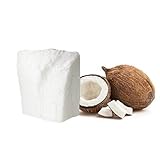
Overview: The Coconut 83 Wax slab delivers professional-grade performance for serious candle makers seeking an all-natural container blend. This 11.25-pound slab combines predominantly coconut wax with vegetable waxes, creating a formulation that excels in fragrance delivery and aesthetic finish. Designed for container candles, it promises a cooler burn profile and eliminates common issues like frosting, making it ideal for both beginners and experienced artisans.
What Makes It Stand Out: This wax distinguishes itself through exceptional hot and cold scent throw capabilities, ensuring your candles smell amazing even when unlit. The one-pour formulation saves significant time and reduces waste by eliminating the need for re-pours or topping off. Its natural composition requires zero additives, while the specialized blending prevents colored candles from developing unsightly frosting. The cooler burn temperature translates to longer-lasting candles that maintain their integrity throughout use.
Value for Money: Positioned as a premium natural wax, the per-pound cost reflects its professional-grade performance. While slightly pricier than basic soy waxes, the one-pour convenience and superior scent throw eliminate the need for additional additives or corrective measures. The 11.25-pound slab offers enough material for approximately 30-35 medium container candles, making it cost-effective for small-batch producers.
Strengths and Weaknesses: Strengths include outstanding fragrance release, clean burning with minimal soot, excellent jar adhesion, and true one-pour convenience. The natural formulation appeals to eco-conscious consumers. Weaknesses involve the slab format requiring cutting tools and effort, potential batch-to-batch variations inherent to natural products, and a narrower fragrance load window (8-10%) compared to some alternatives.
Bottom Line: Perfect for candle makers prioritizing scent performance and natural ingredients, this wax justifies its premium price through time-saving features and professional results.
2. TooGet Natural Coconut Wax 14 oz - DIY Handmade Scented Candle Making Supplies Pure White Coconut Wax, Melting Point 41°/106°F

Overview: TooGet’s Natural Coconut Wax offers a compact 14-ounce entry point for hobbyists and DIY enthusiasts exploring coconut wax candles. This pure white, smooth-textured wax provides an accessible way to experiment with premium coconut wax without committing to bulk quantities. With a lower melting point of 106°F, it works exceptionally well for container candles, melts, and intricate silicone mold designs.
What Makes It Stand Out: The impressive 12% fragrance load capacity exceeds many competitors, allowing for intensely scented candles without compromising stability. Its brilliant white color creates an excellent base for vibrant dyes, while the soft texture makes it easy to handle and measure. The wax’s versatility shines through its suitability for everything from simple container candles to complex shaped creations using silicone molds.
Value for Money: As a small-format offering, the per-ounce cost runs higher than bulk alternatives, but this package excels as a low-risk testing medium. It’s perfect for experimenting with new fragrance combinations or creating gift-sized batches. For occasional candle makers, it eliminates storage concerns and upfront investment while delivering premium coconut wax performance.
Strengths and Weaknesses: Strengths include exceptional fragrance retention, pure aesthetic appearance, easy handling, and remarkable versatility across candle types. The low melting point ensures safe, energy-efficient melting. Weaknesses involve the small quantity limiting production scale, potentially higher cost per candle for frequent makers, and lack of detailed wick guidance for optimal performance.
Bottom Line: Ideal for beginners and experimental candle makers wanting to test coconut wax benefits without bulk commitment.
3. Coconut Candle Wax 10lb by FLEUR DE SPA – Premium All-Natural Coconut Wax Blend – Made in USA – Clean Burn, Great Scent Throw – for DIY Candle Making (10 Pound Box)

Overview: FLEUR DE SPA’s Coconut Candle Wax presents a 10-pound premium option for dedicated DIY candle makers seeking American-made quality. This all-natural coconut blend emphasizes clean burning and superior scent throw in a soft wax formulation specifically engineered for container candles. The “True Coconut” designation signals a high-purity composition that adheres beautifully to glass while delivering extended burn times.
What Makes It Stand Out: Made in the USA sourcing appeals to consumers prioritizing domestic production and quality control. The wax’s exceptionally soft texture ensures effortless melting and pouring, while its formulation eliminates common issues like frosting and poor jar adhesion. The manufacturer specifically recommends CDN and ECO wick series, providing valuable guidance that reduces trial-and-error for optimal burning performance.
Value for Money: The 10-pound quantity strikes an excellent balance between bulk savings and manageable storage, offering enough material for approximately 25-30 medium candles. Pricing typically falls in the mid-premium range, justified by domestic manufacturing and consistent batch quality. For regular candle makers, this represents a sweet spot of affordability without sacrificing professional results.
Strengths and Weaknesses: Strengths include excellent glass adhesion, consistent clean burning, impressive hot and cold scent throw, and reliable American sourcing. The specific wick recommendations are incredibly helpful. Weaknesses include the soft texture requiring careful temperature management, potential need for wick sizing experimentation despite recommendations, and limited information on maximum fragrance load capacity.
Bottom Line: An excellent choice for serious hobbyists wanting reliable, American-made coconut wax with proven performance.
4. American Soy Organics Freedom Coconut Soy Wax Beads for Candle Making - Natural Candle Making Supplies - Paraffin-Free,Beeswax-Free Coconut Candle Wax for Container Candles,Tealights, Wax Melts 5 lbs

Overview: American Soy Organics Freedom Coconut Soy Wax Beads revolutionize the candle-making process with their innovative bead format and coconut-soy blend. This 5-pound package combines Midwest-grown soybeans with natural coconut wax in convenient, quick-melting beads that eliminate the hassle of chopping slabs. Designed for container candles, tealights, and wax melts, it offers an accessible entry into premium blended waxes.
What Makes It Stand Out: The microwavable bead format represents a significant workflow improvement, allowing precise measuring and rapid melting without specialized equipment. The paraffin-free, beeswax-free formulation appeals to eco-conscious makers, while the smooth, creamy appearance ensures professional-looking results. With a melting point of 115-121°F, it’s safe to handle and burns consistently.
Value for Money: The 5-pound size offers substantial savings over smaller packages while remaining manageable for hobbyists. The bead format reduces waste and saves time, effectively lowering the true cost per candle. While slightly more expensive than pure soy, the coconut addition enhances scent throw and burn quality, justifying the modest premium for those seeking superior performance.
Strengths and Weaknesses: Strengths include unparalleled convenience, ethical American sourcing, excellent scent retention with 10% fragrance load, and smooth, consistent results. The bead format prevents mess and enables easy customization. Weaknesses involve being a coconut-soy blend rather than pure coconut, which may not suit purists, and the lower melting point requiring careful storage in warm climates.
Bottom Line: Perfect for makers valuing convenience and ethical sourcing without compromising on quality.
5. American Soy Organics Freedom Coconut Soy Wax Beads for Candle Making - Natural Candle Making Supplies - Paraffin-Free,Beeswax-Free Coconut Candle Wax for Container Candles,Tealights,Wax Melts 10 lbs

Overview: This 10-pound version of American Soy Organics Freedom Coconut Soy Wax Beads scales up the convenience for serious candle makers and small businesses. Identical in formulation to its 5-pound counterpart, this larger quantity combines coconut and soy waxes in mess-free beads that melt quickly and evenly. The ethical, American-sourced ingredients maintain the same high standards for container candles, tealights, and wax melts.
What Makes It Stand Out: The bulk bead format delivers unmatched production efficiency, allowing makers to quickly measure precise batches without time-consuming preparation. The coconut-soy blend provides the best of both worlds: soy’s reliability and coconut’s superior scent throw. The 10-pound quantity significantly reduces packaging waste and per-pound cost, making it economically smart for regular production.
Value for Money: For frequent candle makers, this size offers the best per-pound value in the Freedom line, effectively halving the packaging premium. The time savings from the bead format become even more significant at scale, reducing labor costs. While the upfront investment is higher, the cost per candle drops substantially, making it ideal for those selling their creations or making candles regularly.
Strengths and Weaknesses: Strengths include bulk pricing advantages, consistent batch-to-batch quality, ethical domestic sourcing, and the revolutionary convenience of beads. The 10% fragrance load performs well across various applications. Weaknesses include the same storage considerations in warm weather due to the lower melting point, and the blend format may not satisfy those seeking 100% coconut wax.
Bottom Line: The smart choice for dedicated makers wanting maximum convenience and value from an ethical, high-performance wax.
6. Coconut Candle Wax 6lb by FLEUR DE SPA – Premium All-Natural Coconut Wax Blend – Made in USA – Clean Burn, Great Scent Throw – for DIY Candle Making (6 Pound Box)
Overview: FLEUR DE SPA’s Coconut Candle Wax is a premium 6-pound box of all-natural coconut wax blend crafted in the USA for discerning DIY candle makers. This true coconut wax formulation promises an exceptionally clean burn with superior fragrance throw compared to traditional soy wax. Its soft, pliable nature ensures excellent glass jar adhesion, making it ideal for container candles that look as professional as they perform.
What Makes It Stand Out: This wax distinguishes itself as a “true coconut” formulation rather than a blend, delivering a noticeably slower burn rate and cleaner combustion than soy alternatives. The manufacturer provides specific technical guidance, including optimal pouring temperatures of 150-170°F and precise wick recommendations (CDN and ECO series), which demonstrates their commitment to helping crafters achieve professional results. The wax’s milky white appearance and smooth texture accept dyes beautifully, offering creative flexibility.
Value for Money: Priced as a premium product, the 6-pound quantity strikes an excellent balance between sample size and bulk value. While more expensive per pound than mass-market soy wax, the extended burn time means candles last longer, providing better end-user value. For serious hobbyists and small business owners, the consistent performance and reduced troubleshooting justify the investment.
Strengths and Weaknesses: Strengths include outstanding scent throw, exceptional jar adhesion, clean burning properties, easy dye absorption, and slower burn rate than soy. Weaknesses involve its soft consistency requiring careful handling in warm environments, limited wick compatibility (sticking to CDN/ECO series), and premium pricing that may deter casual hobbyists.
Bottom Line: FLEUR DE SPA delivers a top-tier coconut wax that serious candle makers will appreciate. If you prioritize performance, clean ingredients, and professional results over budget constraints, this premium wax deserves your consideration.
7. Direct Candle Supply - 10 lb Coconut Soy Candle Wax for Candle Making - Creamy Blend for High Load Fragrance Formulation, Coco Wax, Coconut Soy Candle Wax, Cera para Velas
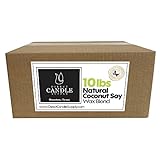
Overview: Direct Candle Supply’s 10-pound coconut soy wax blend targets high-volume DIY candle makers seeking professional-grade performance. This formulation combines coconut wax, soy wax, and small amounts of paraffin to create a creamy base optimized for maximum fragrance retention. Designed for clean combustion and robust scent throw, this bulk offering serves both hobbyists scaling up and small businesses.
What Makes It Stand Out: The wax excels in fragrance absorption, accommodating high scent loads ideal for aromatherapy and strongly scented candles. Its bulk 10-pound packaging provides excellent value for frequent makers, while the all-natural ingredient base (with minimal paraffin) ensures reliable performance without harmful chemicals. The blend’s versatility makes it compatible with various container types and complements the brand’s own candle-making kits.
Value for Money: This 10-pound quantity offers compelling bulk pricing that significantly reduces cost per pound compared to smaller packages. For makers producing candles regularly, the savings quickly offset the initial investment. The wax’s ability to hold high fragrance loads means less scent oil required per candle, further improving overall cost efficiency.
Strengths and Weaknesses: Strengths include excellent fragrance retention, long clean burn, bulk value, odor-free composition, and suitability for high-load formulations. Weaknesses include color variation between off-white and beige (affecting aesthetic consistency), presence of paraffin (despite being food-grade), and potential need for wick testing due to blend variability.
Bottom Line: Ideal for serious candle makers prioritizing scent performance and bulk value. If you don’t mind minimal paraffin content and want consistent results at scale, this 10-pound option delivers impressive results.
8. Direct Candle Supply - Coconut Soy Wax Blend for Candle Making - 5 lb. Creamy Blend for High Load Fragrance Formulation - (5 lb)
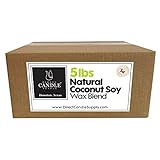
Overview: Direct Candle Supply offers this 5-pound version of their popular coconut soy wax blend, providing the same high-performance formulation in a more manageable size for hobbyists and small-batch creators. This creamy blend of coconut wax, soy wax, and minimal paraffin delivers professional results with excellent fragrance retention and clean burning characteristics.
What Makes It Stand Out: The smaller 5-pound quantity allows makers to test the wax’s performance without committing to bulk purchase. It maintains the same high fragrance load capacity as its larger counterpart, absorbing scents effectively for powerful cold and hot throw. The all-natural base with plant-based additives ensures a non-toxic, odor-free foundation for premium candles that customers will appreciate.
Value for Money: While the per-pound cost runs higher than the 10-pound option, this size eliminates waste for those experimenting with new fragrances or techniques. It’s an economical entry point for beginners or occasional makers who don’t need bulk storage. The price remains competitive with other mid-tier waxes while offering superior performance and consistent results.
Strengths and Weaknesses: Strengths include excellent scent throw, clean burn, manageable quantity, natural ingredients, and versatility. Weaknesses mirror the larger version: potential color inconsistency, contains paraffin, and may require wick experimentation. The smaller package also means more frequent repurchasing for active makers.
Bottom Line: Perfect for beginners testing coconut-soy blends or experienced makers wanting trial quantities. This 5-pound option balances performance and practicality without overwhelming storage space.
9. Hemp Luxury Coconut Soy Blend Wax 11.25 Pound Slab Great for Containers Candles

Overview: This innovative Hemp Luxury Coconut Soy Blend offers an 11.25-pound slab of unique wax combining hemp, soy, coconut, and food-grade paraffin. Designed for container candles, this single-pour formulation simplifies the candle-making process while delivering exceptional cold and hot scent throw. The renewable, vegan, and non-toxic composition appeals to environmentally conscious crafters.
What Makes It Stand Out: The addition of hemp creates a distinctive selling proposition, potentially offering unique burning characteristics. Its impressive 12% fragrance load capacity exceeds many competitors, allowing for intensely scented creations. The single-pour nature eliminates the need for re-pouring or topping off, saving time and reducing waste. Great glass adhesion ensures professional-looking finished products.
Value for Money: The 11.25-pound slab provides substantial material at a competitive price point. While the slab format requires breaking down, the quantity offers excellent per-pound value for active makers. The high fragrance capacity means efficient scent oil usage, maximizing your investment across multiple candle batches.
Strengths and Weaknesses: Strengths include high fragrance load, single-pour convenience, renewable ingredients, excellent scent throw, and vegan certification. Weaknesses involve the slab format’s inconvenience, soft consistency during summer shipping, and paraffin content despite being food-grade. The hemp component may require wick testing for optimal results.
Bottom Line: An excellent choice for makers wanting maximum fragrance capacity with eco-friendly credentials. If you can manage the slab format and occasional shipping softness, this wax delivers outstanding performance.
10. TooGet Natural Coconut Wax 2 lb - DIY Handmade Scented Candle Making Supplies Pure White Coconut Wax, Melting Point 41°/106°F
Overview: TooGet’s Natural Coconut Wax comes in a compact 2-pound package of pure white coconut wax with a low melting point of 106°F. This versatile wax suits various applications from container candles to intricate silicone mold designs. Its pure formulation offers excellent glass adhesion and fragrance retention for DIY enthusiasts creating specialty candles.
What Makes It Stand Out: The low melting point makes this wax exceptionally easy to work with, reducing heating time and energy costs. Its pure coconut composition provides a clean, creamy aesthetic that accepts dyes and fragrances readily. The wax’s versatility extends beyond containers to wax melts and complex molded shapes, making it ideal for experimental crafters exploring different candle forms.
Value for Money: The 2-pound size offers an affordable entry point for beginners or those wanting to test pure coconut wax properties. While the per-pound cost exceeds bulk options, the minimal upfront investment reduces financial risk. For small projects or occasional crafting, this quantity prevents material waste and storage issues while delivering professional results.
Strengths and Weaknesses: Strengths include low melting point, pure coconut formulation, excellent adhesion, long burn time, and versatility across candle types. Weaknesses include higher cost per pound, small quantity requiring frequent repurchase, and potential need for additives to achieve desired hardness for certain applications.
Bottom Line: Ideal for beginners, experimental makers, or those needing pure coconut wax for specialty projects. If you’re exploring coconut wax’s unique properties or creating small batches, this 2-pound offering provides excellent quality without overcommitment.
Understanding Coconut Wax: The 2026 Landscape
Coconut wax has revolutionized the candle industry, but not all coconut wax is created equal. By 2026, advancements in processing and blending have created distinct tiers of quality that directly impact both price and performance.
The Science Behind Coconut Wax
Coconut wax is derived from hydrogenated coconut oil, creating a clean-burning, slow-melting foundation that holds fragrance exceptionally well. Its molecular structure is less crystalline than soy, allowing for better fragrance oil suspension and a more consistent melt pool. The key metric to understand is the iodine value—a lower iodine value indicates a harder, more stable wax that resists frosting and maintains structural integrity in warmer environments. Premium coconut waxes in 2026 typically feature iodine values below 10, while budget blends may creep into the 12-15 range, affecting both burn quality and scent release.
Why Coconut Wax Became the Eco-Friendly Gold Standard
Beyond performance, coconut wax’s sustainability credentials have only strengthened. Modern harvesting practices emphasize regenerative agriculture, with many suppliers now offering blockchain-verified sourcing that tracks each batch from farm to final pour. The wax itself burns 30-50% longer than paraffin and produces virtually no soot when properly wicked. This clean burn isn’t just marketing—it means less indoor air pollution and no black residue on your walls or ceilings, a hidden cost of cheaper waxes that many consumers overlook.
Demystifying “Throw”: Cold vs. Hot Performance
Throw is the industry term for a candle’s scent dispersion, but this simple word encompasses two distinct performance metrics that savvy shoppers must evaluate separately.
What Throw Actually Measures
Cold throw refers to the fragrance intensity when the candle is unlit, while hot throw measures scent release during burning. A common pitfall with affordable coconut wax candles is exceptional cold throw paired with disappointing hot throw. This happens when manufacturers use high concentrations of top-note fragrances that evaporate quickly or when the wax blend can’t maintain the optimal temperature range needed to volatilize heavier base notes. The ideal candle delivers a balanced cold throw that invites you in and a hot throw that projects 8-10 feet beyond the melt pool.
Why Coconut Wax Behaves Differently
Coconut wax’s lower melting point (typically 100-108°F) means it reaches optimal fragrance release temperature faster than soy or paraffin. However, this same characteristic makes it more sensitive to ambient temperature and draft. In 2026’s climate-conscious homes, where HVAC systems run more efficiently and room temperatures fluctuate less, coconut wax performs exceptionally well. But in older buildings or during seasonal transitions, you’ll notice performance variations that directly impact throw. This is why the best affordable options now include specific burning temperature recommendations on their labels.
The Price-Performance Equation in 2026
The coconut wax candle market has matured into distinct price tiers, each with predictable performance characteristics that help you shop smarter.
Raw Material Costs and Market Trends
Global coconut oil prices stabilized in late 2025 after volatile years, but premium, pesticide-free coconut oil still commands a 40% premium over conventional grades. The most cost-effective candle makers in 2026 are those using a hybrid approach: 70% coconut wax blended with 30% sustainably sourced beeswax or rapeseed wax. This maintains coconut’s clean-burning benefits while improving scent throw and reducing costs by approximately 25%. Watch for terms like “coconut wax blend”—this isn’t deception, but rather smart formulation that can deliver better performance than pure coconut at a lower price point.
The “Affordable Luxury” Sweet Spot
Through extensive market analysis, the $18-$28 price range for 8-10 oz candles represents the current sweet spot where quality fragrance oils, proper wick sizing, and clean coconut wax converge without unnecessary branding premiums. Below $15, you’re likely encountering diluted fragrance loads (below 6%) or wicks that haven’t been properly tested for the specific wax blend. Above $35, you’re often paying for vessel design, influencer collaborations, or retail markups rather than improved throw performance.
Critical Features That Determine Throw Quality
Understanding the component trio—wick, fragrance, and container—empowers you to evaluate any candle objectively, regardless of marketing claims.
Wick Construction and Materials
The wick is your candle’s engine. In 2026, wood wicks have evolved beyond their crackling novelty status into serious performance tools, particularly for coconut wax. Flat-braided cotton wicks with paper cores remain the reliability champions, but look for specific designations like “ECO” series or “CD” series, which indicate engineered flat braids designed to curl and self-trim. Avoid candles with visibly thick, rope-like wicks—they’re often over-wicked to compensate for poor wax formulation, leading to fast burns and wasted fragrance.
Fragrance Oil Concentration and Quality
The industry standard fragrance load is 6-10% of wax weight, but this metric alone is misleading. Premium fragrance oils with higher flash points (above 160°F) can be loaded at 8-10% without evaporating prematurely. Budget oils with lower flash points may dissipate even at 6% loads. The 2026 innovation to watch for is “encapsulated fragrance technology,” where scent molecules are micro-coated to release gradually. This allows for loads up to 12% without burning off too quickly, dramatically improving hot throw in affordable candles.
Container Geometry and Wax-to-Container Ratio
A candle’s vessel is more than decorative—it’s a thermal management system. The ideal wax-to-container ratio ensures the melt pool reaches the edges within 2-3 hours but doesn’t exceed ½ inch depth. Containers with diameters between 2.75-3.25 inches optimize coconut wax’s heat characteristics. Wider vessels require multiple wicks, which increases cost but ensures complete wax consumption. Tall, narrow containers often suffer from “tunneling” in budget lines where wicks aren’t powerful enough to maintain a full melt pool.
Smart Shopping Strategies for Maximum Value
Arm yourself with evaluation techniques that reveal a candle’s true performance potential before you commit to a purchase.
How to Read Between the Lines of Product Descriptions
Vague phrases like “luxurious scent” or “premium fragrance” are red flags. Instead, look for specific claims: “triple-scented,” “maximum fragrance load,” or “proprietary coconut wax blend.” The most transparent brands now disclose exact fragrance percentages or mention specific fragrance houses they partner with. Check for burn time claims that seem realistic—an 8 oz coconut wax candle should provide 40-50 hours of burn time. Claims exceeding 60 hours likely indicate under-wicking, which sacrifices throw for longevity.
Red Flags That Signal Weak Performance
Be wary of candles with excessive decorative elements like dried flowers or coffee beans embedded in the wax. These interfere with melt pool formation and wick performance. Similarly, vessels with thick, colored glass can mask poor wax quality—the color is often added to hide inconsistent wax blends. Inspect product photos for frosting (white crystalline patterns on the wax surface), which indicates temperature fluctuations during production and suggests poor quality control that can affect throw consistency.
Certification Labels That Actually Matter
While “phthalate-free” and “cruelty-free” are now baseline expectations, look for 2026-specific certifications like “Coconut Sustainability Initiative (CSI)” or “Clean Candle Alliance Verified.” These newer standards audit not just ingredients but performance testing protocols, ensuring candles meet minimum throw standards. The “IFRA Certified” label guarantees fragrance oils comply with international safety standards, but more importantly, indicates the brand invests in quality raw materials rather than generic fragrance stocks.
The Curing Process: Why Fresh Isn’t Always Best
Here’s a insider secret: coconut wax candles improve with age. The curing process, where fragrance oils fully bind with wax molecules, takes 7-14 days minimum. Many mass-market producers ship candles after just 48-72 hours of curing to meet demand, resulting in weak initial performance.
The best affordable brands now implement minimum 10-day curing protocols and include “pour dates” on their labels. A candle poured three weeks ago will outperform a freshly-poured premium candle every time. If you’re shopping in-store, gently press the wax surface—a properly cured candle will feel firm with slight give, while under-cured wax feels soft or oily. This simple test reveals whether the manufacturer prioritized performance over speed.
Container Design: Beyond Aesthetics
The vessel’s material, shape, and even color significantly influence how fragrance molecules disperse. Understanding these factors helps you choose candles that deliver on their promises.
Metal containers conduct heat too efficiently, causing coconut wax to overheat and burn off top notes too quickly. Ceramic and concrete vessels, while trendy, often insulate too much, requiring longer burn times to achieve full throw. The 2026 sweet spot is borosilicate glass or specifically engineered tinplate steel with insulated bases. These materials maintain the 160-180°F melt pool temperature that optimizes fragrance release without scorching.
Vessel shape matters more than you’d think. Straight-sided containers with slight inward tapering at the top create a “chimney effect,” naturally drawing heat and fragrance upward and outward. This design feature, borrowed from traditional candle-making, is making a comeback in affordable lines because it improves throw without requiring more expensive fragrance oils or complex wick systems.
Wick Types That Transform Performance
The wick debate has moved beyond cotton vs. wood. Modern wick engineering offers specific solutions for coconut wax’s unique characteristics.
Flat-braided cotton wicks with specialized paper filaments remain the workhorse for consistent performance. However, 2026’s breakthrough is the “hybrid wood-cotton” wick, featuring a thin wood core wrapped in cotton braid. This design provides wood’s broad flame and heat distribution with cotton’s reliability and minimal mushrooming. For coconut wax specifically, look for wicks designated “coconut-ready” or “high-mobility,” indicating they’re engineered to handle the wax’s lower viscosity when melted.
Avoid zinc-core wicks entirely—they’re outdated technology that creates unnecessary metal emissions and doesn’t complement coconut wax’s clean-burning profile. Similarly, avoid candles where the wick appears off-center; even a ⅛ inch misalignment can cause uneven melting and reduce throw by up to 30%.
Fragrance Load vs. Wax Capacity: The Balancing Act
There’s a dangerous myth that more fragrance oil equals better throw. In reality, coconut wax can only bind with a finite amount of oil before becoming unstable.
The practical limit for stable coconut wax candles is 10-12% fragrance load. Beyond this, you risk “sweating” where oil leaches to the surface, creating a fire hazard and uneven burn. Sophisticated affordable brands are now using fragrance oil extenders—specifically, plant-derived fixatives like benzoin resin or natural isolates—that amplify perceived scent strength without increasing oil percentage.
When evaluating candles, look for terms like “proprietary fixative blend” or “enhanced fragrance diffusion.” These indicate the brand has invested in chemistry rather than just dumping in more oil. A well-formulated 8% fragrance load with proper fixatives will outperform a poorly balanced 12% load every time.
Seasonal and Environmental Factors
Your home’s environment dramatically impacts candle performance, and coconut wax is particularly sensitive to these variables.
During winter heating season, indoor humidity often drops below 30%, causing coconut wax to burn hotter and faster, which can actually improve throw but reduces burn time by 15-20%. Conversely, summer humidity above 60% can make coconut wax feel softer and burn cooler, requiring longer initial burns to establish proper melt pools. The best practice is to store candles in a climate-controlled environment and adjust your first burn time seasonally—add 30 minutes to the recommended burn time in humid conditions.
Altitude affects coconut wax more than other waxes. Above 3,000 feet, lower air pressure causes faster fragrance evaporation. If you live at altitude, seek candles specifically labeled “high-altitude formulation” or those using encapsulated fragrance technology. These adjustments, once limited to luxury brands, are now appearing in affordable options as manufacturers recognize regional performance variations.
Maintenance Habits That Make or Break Throw
Even the best affordable coconut wax candle will underperform if mistreated. Proper care is non-negotiable for maximum scent dispersion.
The first burn is sacrosanct: allow the melt pool to reach the container edges completely, which typically takes 1 hour per inch of container diameter. Skipping this creates “memory rings” where wax tunneling permanently reduces the surface area releasing fragrance. Trim wicks to exactly ¼ inch before each burn—this isn’t arbitrary. At ¼ inch, the flame reaches the optimal 1-1.5 inch height that vaporizes fragrance without creating soot or overheating the wax.
Never burn candles for more than 4 hours consecutively. Beyond this point, coconut wax can become overheated, causing fragrance oils to break down into less aromatic compounds. The result is a candle that smells weaker in its final third than its first light. This degradation is irreversible and often mistaken for poor quality when it’s actually user error.
Sustainability Standards for 2026
Environmental responsibility and performance are no longer mutually exclusive. Understanding modern sustainability metrics helps you identify brands that excel at both.
The “Coconut Sustainability Initiative (CSI)” certification, launched in late 2025, verifies not just agricultural practices but also fair labor standards and carbon-neutral shipping. More importantly for throw, CSI-certified producers must demonstrate batch-to-batch consistency in wax properties, ensuring predictable performance. This standardization directly benefits affordable lines by reducing waste and quality control failures.
Look for “closed-loop fragrance” programs where brands partner with suppliers to recycle spent fragrance oil containers and minimize volatile organic compound (VOC) emissions during production. These programs indicate a level of supply chain integration that typically correlates with better quality control—and thus more reliable throw—in the final product.
Decoding Modern Marketing Terminology
The language of candle marketing has become increasingly sophisticated, often obscuring more than it reveals. Learning to translate these terms is essential for finding true value.
“Clean burn” should mean no soot, not just no phthalates. “Non-toxic” is meaningless without specific avoided ingredient lists—ask for the brand’s “Red List” of prohibited chemicals. “Luxury” has become so diluted it often just means “expensive.” Instead, look for functional claims: “maximum scent dispersion,” “room-filling fragrance,” or “proven throw technology.”
Be particularly skeptical of “essential oil only” claims in affordable candles. Pure essential oils have low flash points and poor performance in coconut wax. The best affordable options use a hybrid approach: essential oils for authenticity, reinforced with safe synthetic aroma compounds for stability and throw. This isn’t deception—it’s necessary chemistry that responsible brands will explain transparently.
When to Splurge vs. When to Save
Strategic spending means knowing which features justify higher prices and which are just window dressing.
Spend extra on candles with complex fragrance profiles—those featuring base notes like oud, amber, or sandalwood. These heavy molecules require higher-quality wax and precise wicking to volatilize properly. Save on simple citrus or herbal scents, which are naturally volatile and perform well even in budget formulations.
Invest in proper vessel design over decorative elements. A simple, well-engineered glass container delivers better throw than an expensive ceramic piece with poor thermal properties. Similarly, prioritize fragrance quality over fancy packaging—many affordable brands now sell “refill” candles without vessels at 40% savings, allowing you to reuse a quality container while accessing premium scent performance.
Frequently Asked Questions
How can I test a coconut wax candle’s throw before buying it?
While you can’t light it in-store, smell the unlit candle from 6-8 inches away—this approximates cold throw strength. Then, gently warm the wax surface with your hand for 10-15 seconds and smell again; this simulates hot throw. A quality candle will show complexity in both states. Online, look for detailed scent descriptions mentioning base, middle, and top notes, plus customer reviews specifically mentioning “fills my living room” rather than just “smells nice.”
Does a higher price always mean better throw in coconut wax candles?
Not necessarily. By 2026, the $20-25 range has become highly competitive, with many brands offering performance rivaling $40+ candles. Price premiums above $30 typically reflect vessel design, brand positioning, or retail markups rather than improved throw. Focus on technical specifications—wick type, fragrance load disclosure, and cure time—rather than price alone.
Why does my coconut wax candle smell great at first but fade quickly?
This is often a wick-to-fragrance mismatch. If the wick is too small, it won’t generate enough heat to volatilize mid and base notes, which emerge after the top notes burn off within the first hour. It could also indicate insufficient cure time—fragrance oils haven’t fully bound to the wax, so they evaporate prematurely. Try burning the candle in a smaller, enclosed room to test if the issue is throw strength versus fragrance longevity.
How long should I let a coconut wax candle cure before burning it?
While manufacturers cure for 7-14 days, your candle will continue improving for 2-4 weeks after purchase. The wax continues to bind with fragrance molecules, and any residual moisture from production fully evaporates. If you can wait, store new candles in a cool, dark place for three weeks before first use. You’ll notice a 20-30% improvement in hot throw compared to burning immediately.
Can I improve a weak-performing coconut wax candle’s throw?
Yes, within limits. Try “hugging” the candle—after extinguishing, gently push the softened wax walls inward to increase the melt pool surface area. You can also burn it in a smaller space or place it near a corner where walls reflect scent molecules. However, if the issue is under-wicking or low fragrance load, these are formulation problems that can’t be fixed post-purchase.
What container size offers the best throw for the price?
The 9-10 oz range with a 3-inch diameter provides optimal throw-to-cost ratio. This size allows sufficient wax depth for a stable melt pool without requiring multiple wicks. Single-wick candles in this range keep costs down while delivering enough surface area to fragrance an average 200-square-foot room effectively.
Are wood wicks or cotton wicks better for coconut wax throw?
For pure coconut wax, modern hybrid wood-cotton wicks provide the best balance—wood’s broad flame maximizes melt pool while cotton’s consistency prevents tunneling. Traditional cotton wicks remain more reliable for coconut blends containing beeswax or soy. Avoid pure wood wicks in candles under $20, as quality control is critical and budget versions often burn inconsistently.
How does room temperature affect coconut wax candle throw?
Coconut wax performs optimally at ambient temperatures between 68-72°F. Below 65°F, the wax may not reach full melt pool temperature, reducing throw. Above 75°F, the wax becomes too fluid, causing fragrance to evaporate too quickly and potentially creating a fire hazard. Use a thermometer to find your room’s cool spots—placing a candle in a 70°F zone versus a 64°F corner can double its effective throw.
What’s the difference between “triple-scented” and regular fragrance loads?
“Triple-scented” is an unregulated marketing term that historically meant three times the industry standard of 0.5% fragrance (so 1.5% total), which is actually quite low. Modern usage is deceptive. Instead, look for specific percentages—8-10% is the functional maximum for stable coconut wax. Any claim beyond 12% is either unstable or using filler oils that don’t contribute to scent.
Should I buy coconut wax candles with additives like vybar or stearic acid?
In affordable candles, small amounts (1-3%) of plant-based stearic acid can improve scent throw by helping fragrance bind to wax and creating a slightly harder melt pool that releases aroma more slowly. However, avoid candles listing petroleum-based vybar or microcrystalline wax—these defeat coconut wax’s clean-burning benefits. The best affordable options use natural additives like beeswax or carnauba wax, which enhance performance while maintaining eco-credentials.
See Also
- 10 Affordable Coconut Wax Candles That Smell Like 5-Star Hotels in 2026
- The 10 Best Coconut Wax Candles for Bedroom Ambiance in 2026
- The 10 Best Coconut Wax Candles Every Yoga Instructor Needs This Year
- 10 Coconut Wax Candles for Beach House Vibes All Year Long
- 10 Coconut Wax Candles for Boho Chic Living Spaces